![[2026 Egypt History Tours] Dakhla Oasis Wildlife Tour: Where Desert Foxes Guard Pharaonic Secrets (Western Desert Living Legends)](https://boddatours.me/images/fallback-post.png)
The Desert Remembers Every Footstep
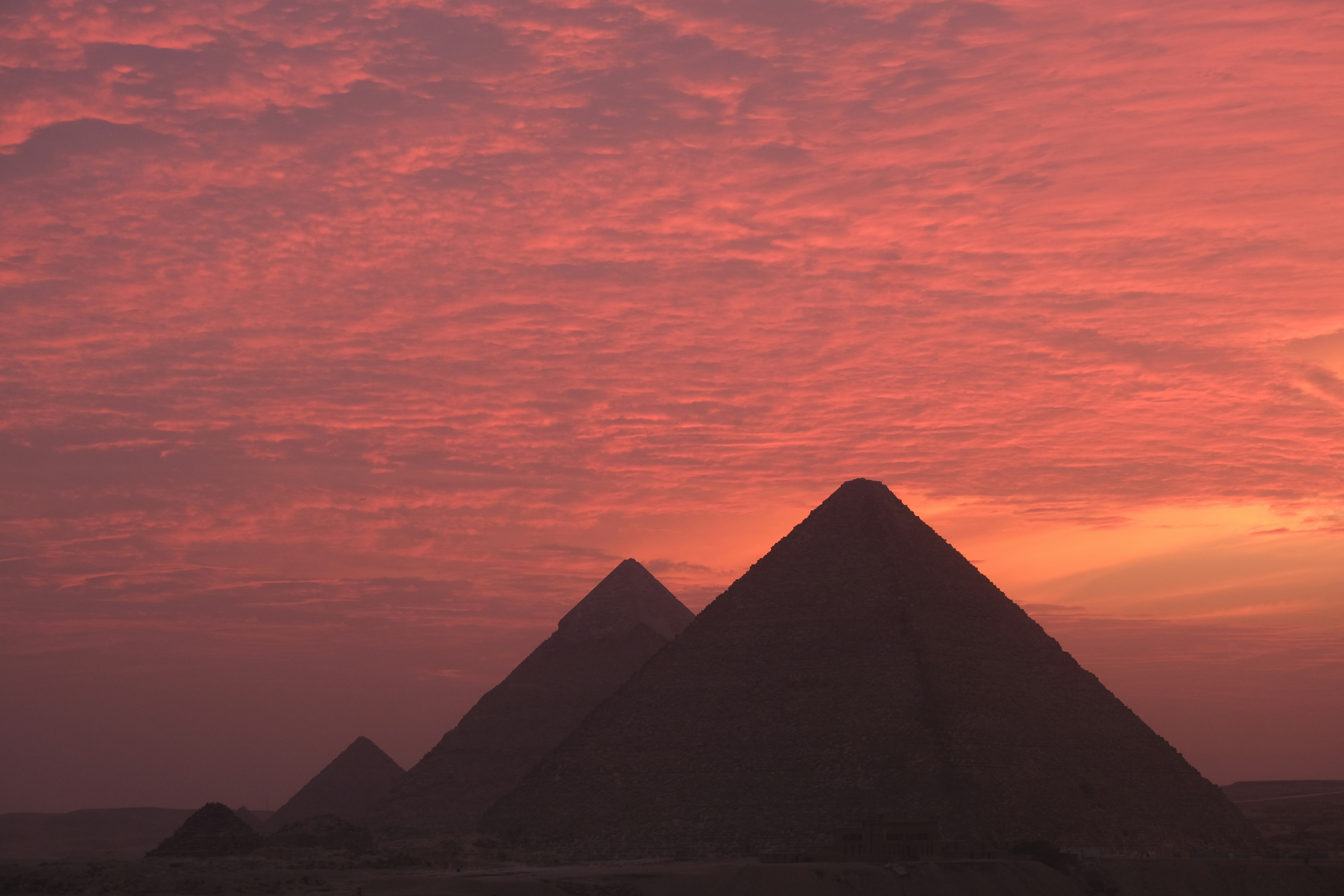
Sand does not forget. I know this because I've watched fennec foxes pause atop Roman fort walls at dusk, their ears twitching at frequencies humans cannot hear — the same frequencies that once carried prayers to Amun-Ra from the Temple of Deir el-Hagar. Dakhla Oasis tour experiences are not about checking boxes. They are about standing where the Western Desert breathes, where every grain holds a story older than the pyramids at Giza.
I'm Bodda. Born in Cairo, raised on stories of the desert from my grandfather who drove supply trucks across these sands before GPS existed. When travelers ask me about Dakhla Oasis, I don't start with distances or logistics. I start with the feeling of sand cooling beneath your feet as the last light paints the mudbrick walls of Al-Qasr gold. That feeling is why you come.
Where History and Wildlife Share the Same Horizon
Dakhla Oasis sits 350 kilometers southwest of Cairo in the New Valley Governorate, one of seven major depressions in Egypt's Western Desert. But coordinates miss the point. This oasis has sustained human life continuously since the Middle Paleolithic — over 100,000 years of footsteps, if the archaeological record at Sheikh Mabruk tells true. The Egyptian Ministry of Tourism and Antiquities confirms Dakhla as one of the longest-inhabited oases in the Sahara.
Here, wildlife and history are not separate chapters. They are the same story written in different scripts. The fennec fox (Vulpes zerda) that darts between the columns of the Roman Temple of Amun-Nakht at Deir el-Hagar descends from ancestors that watched Legio III Cyrenaica patrol these routes. The Egyptian vulture (Neophron percnopterus) circling above the Islamic town of Al-Qasr rides thermals that once lifted the prayers of Mamluk merchants. UNESCO's World Heritage Centre recognizes the Western Desert oases as cultural landscapes where nature and civilization have negotiated survival for millennia.
Pharaonic Foundations: When Thebes Reached West
The earliest pharaonic presence in Dakhla dates to the Old Kingdom, Sixth Dynasty (circa 2345–2181 BCE), when Governor Ima-Pepi inscribed his name at the oasis entrance — a declaration that the king's writ extended this far into the desert. But the real flourishing came during the Middle Kingdom (circa 2055–1650 BCE), when the oasis became a critical waypoint for the "Oasis Road" connecting the Nile Valley to the Libyan Desert trade routes.
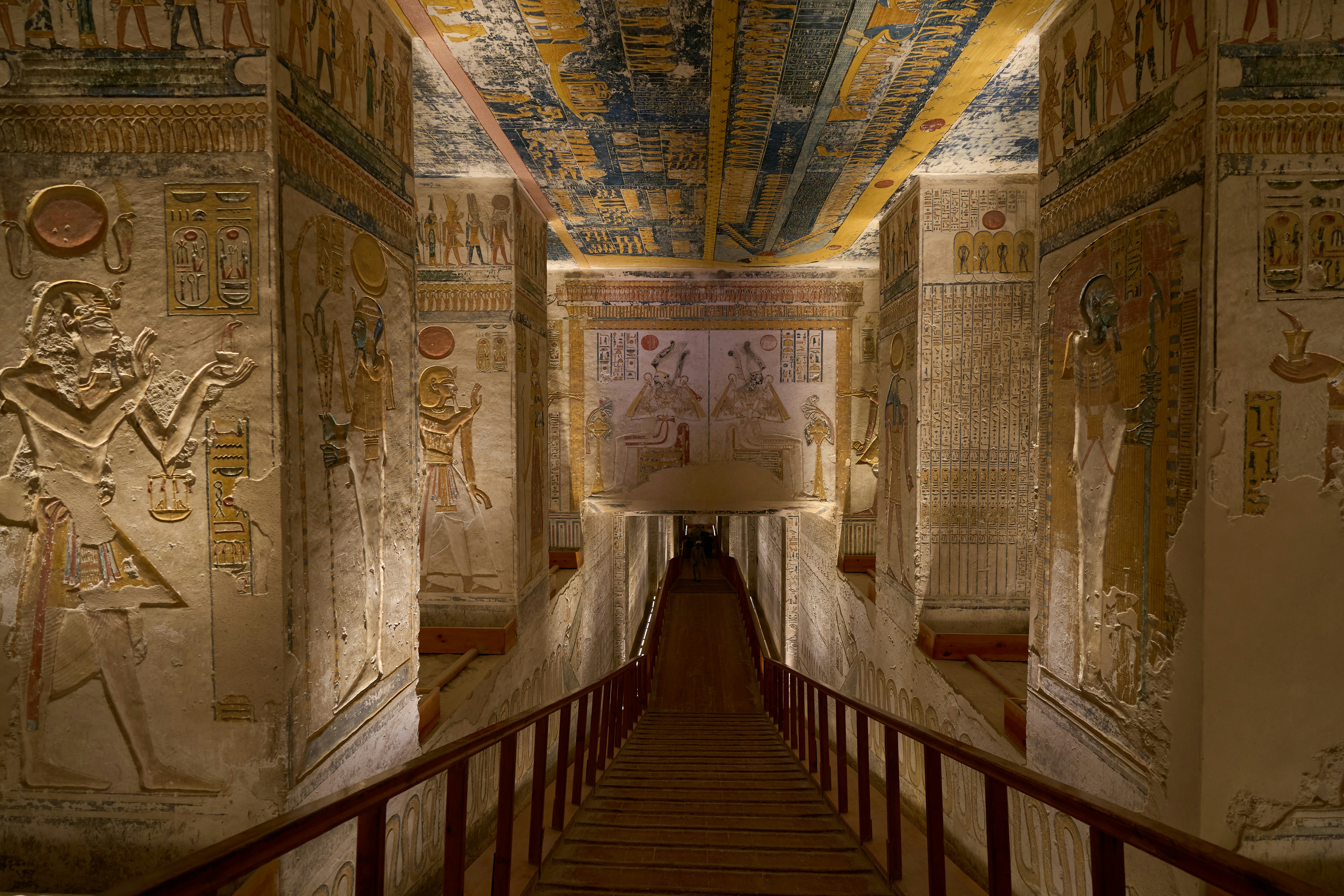
At Mut el-Kharab, the Temple of Mut stands where 18th Dynasty pharaohs (circa 1550–1295 BCE) honored the Theban triad. Hatshepsut and Thutmose III both left cartouches here. The temple's orientation aligns with the summer solstice sunrise — a deliberate architectural choice linking the oasis to the cosmic order of Ma'at. I've stood in that sanctuary at dawn. The light still hits the axis exactly as the priests calculated three thousand years ago.
During the New Kingdom, Dakhla produced wine, dates, and alum (essential for mummification and textile dyeing) for the royal treasury. The "Wine of the Oasis" appears in tomb inscriptions at Thebes. Amphorae stamped with Dakhla seals have been found as far as Amarna and Deir el-Medina. This was not a backwater. This was an economic engine.
Greco-Roman Layer: Alexander's Oracle and Roman Forts
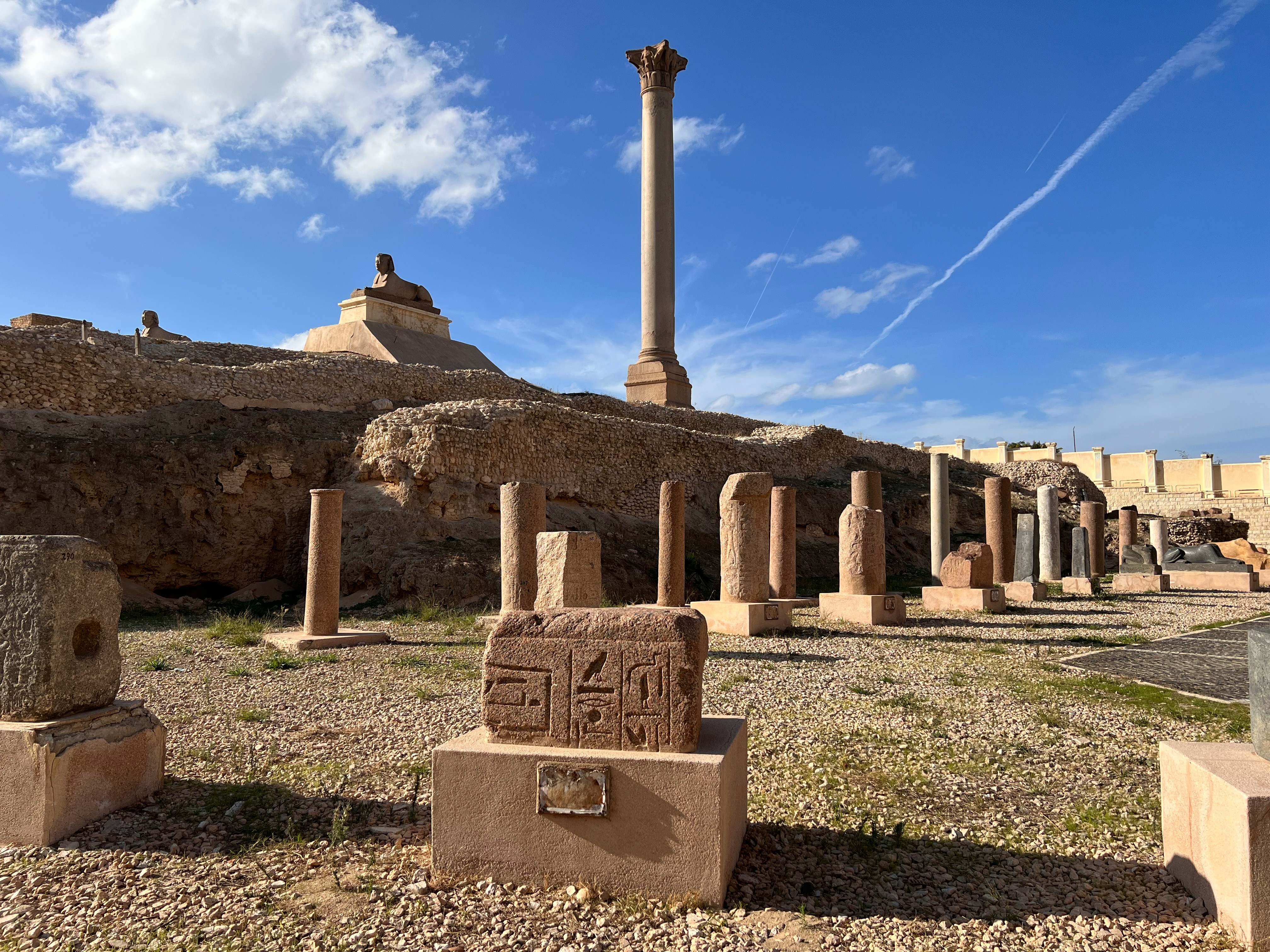
When Alexander the Great marched to Siwa in 331 BCE to consult the Oracle of Amun, his generals secured the western oases as supply lines. Dakhla became a Ptolemaic administrative center. The Temple of Deir el-Hagar, dedicated to Amun-Ra, Mut, and Khonsu, was rebuilt under Nero (54–68 CE) and expanded by Vespasian, Titus, and Domitian. Its sanctuary walls depict Roman emperors in full pharaonic regalia making offerings to Egyptian gods — a visual treaty between empires.
The Romans fortified Dakhla with a string of forts: Qasr el-Gib, Qasr el-Labekha, and the massive Qasr el-Zayyan. These were not mere watchtowers. Qasr el-Gib housed a garrison of 500 soldiers, complete with baths, a principia (headquarters), and an underground aqueduct system (qanat) that still functions. I've traced those tunnels with my hands. The engineering humbles you.
At Ain Amur, a Roman-era spring complex, archaeologists found ostraca (pottery shards with writing) detailing daily rations, guard rotations, and even a soldier's complaint about the quality of dates. History breathes in the mundane.
Islamic Dakhla: Al-Qasr, the Living Medieval Town
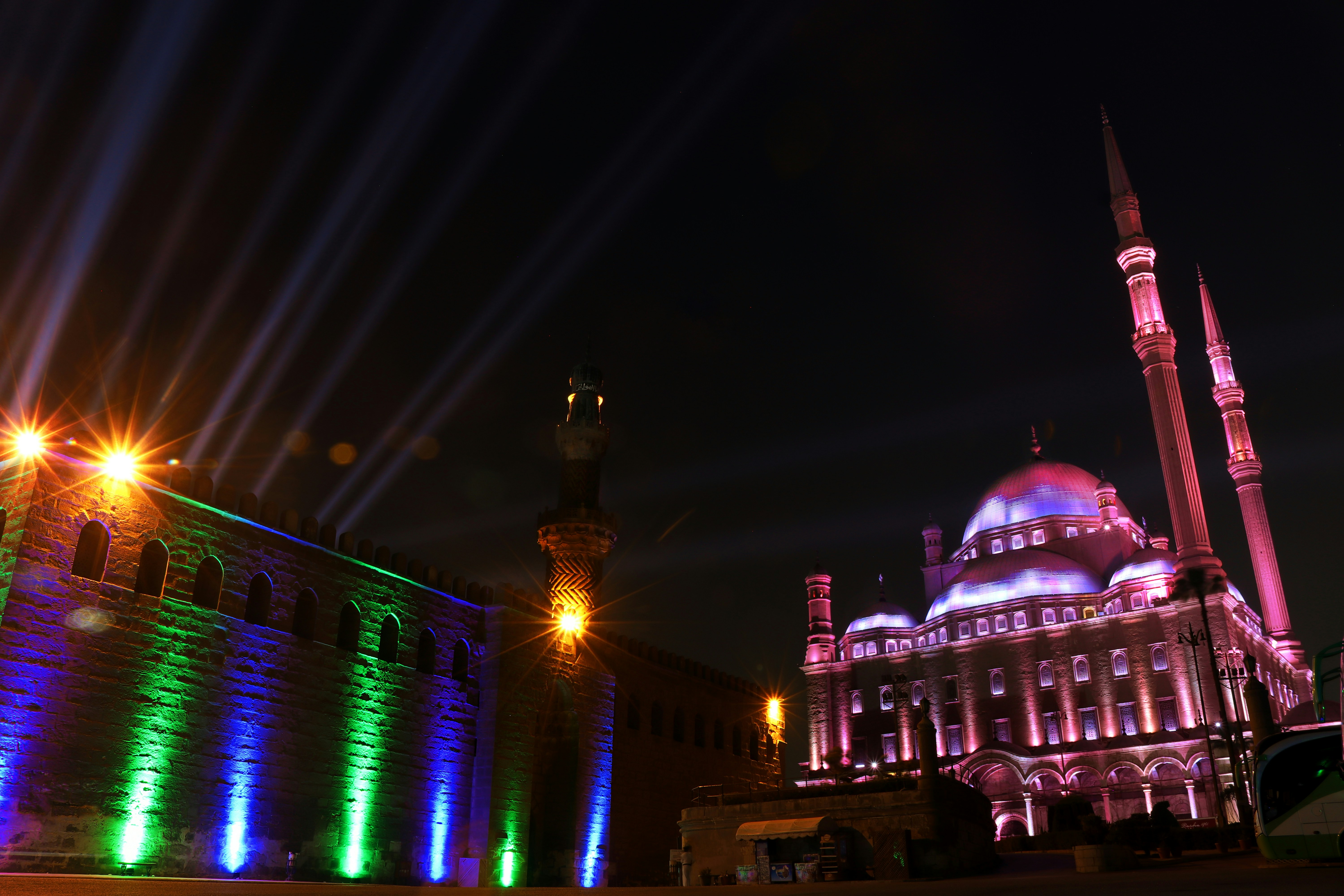
Walk the covered streets of Al-Qasr today and you walk the same labyrinth Mamluk merchants navigated in the 12th century. This is not a reconstructed heritage site. Families still live in houses built atop Ayyubid foundations. The minaret of the Nasr el-Din Mosque (13th century) rises from a forest of palm-log lintels and mudbrick arches.
Al-Qasr's urban plan follows the medieval Islamic principle of "harim" — privacy zones radiating from the mosque outward. The suq (market) streets narrow deliberately to shade pedestrians and slow invaders. Above the doorways, carved wooden lintels bear Quranic verses alongside protective symbols — the Hand of Fatima, the eye against envy — blending orthodox faith with folk tradition.
The town's waqf (endowment) documents, preserved in the local archives, record olive presses, date gardens, and water rights granted in perpetuity to support the mosque and madrasa. Some endowments date to Sultan Qalawun (1279–1290 CE). The legal continuity is staggering.
Wildlife of the Western Desert: Survivors of the Great Drying
Ten thousand years ago, the Western Desert was savanna. Rock art at Dakhla's Sheikh Mabruk and Bashendi depicts giraffes, elephants, and cattle herds. Then the rains retreated. The Sahara became hyper-arid. The animals that remained — or returned — are specialists.
The fennec fox is Dakhla's emblem. Weighing barely 1.5 kilograms, it radiates heat through ears that comprise 20% of its body surface. Its kidneys concentrate urine to near-crystalline efficiency. It can survive without free water indefinitely, extracting moisture from prey — insects, rodents, birds, eggs. I've seen a fennec dig a jerboa from a three-meter burrow in under two minutes. The desert does not tolerate hesitation.
The Rüppell's fox (Vulpes rueppellii) prefers the gravel plains between oases. Larger, paler, with a white-tipped tail. It scavenges near Bedouin camps but hunts independently — gerbils, lizards, beetles. The sand cat (Felis margarita) is the ghost. Nocturnal, solitary, furred paws leaving no tracks on hot sand. I've waited nights at a camera trap near Bir el-Gebel. One frame: golden eyes, then gone.
Birdlife concentrates at springs and cultivated edges. The Egyptian vulture uses stones to crack ostrich eggs — tool use documented by Jane Goodall's team in the 1970s. The pharaoh eagle-owl (Bubo ascalaphus) calls from cliffs at Deir el-Hagar, a sound like a muffled drum. Hoopoe larks (Alaemon alaudipes) perform aerial displays, wings clapping like castanets.
Reptiles dominate the day. The Egyptian spiny-tailed lizard (Uromastyx aegyptia) — "dhabb" in Arabic — basks on Roman fort walls, vegetarian and communal. The Sahara sand viper (Cerastes vipera) sidewinds across dunes, horns above eyes folding flat. The desert monitor (Varanus griseus) patrols wadi beds, swallowing prey whole.
The Springs That Make Life Possible
Dakhla's existence hinges on the Nubian Sandstone Aquifer System — fossil water trapped since the Pleistocene. Over 600 springs once flowed. Today, perhaps 200 remain active. Each spring has a name, a history, a personality.
Bir el-Gebel ("Well of the Mountain") feeds the northern gardens. Its water emerges at 38°C, rich in sulfur. Locals bathe in stone pools for rheumatism. Bir Talata ("Well Three") near Mut supplies the main town. Its flow has dropped 40% in my lifetime — a quiet crisis no headline captures.
The qanat (foggaras) systems at Qasr el-Gib and Amheida are Roman engineering still functioning. Horizontal tunnels tap the water table, gravity-fed, kilometers long. Maintenance is hereditary knowledge. The "water masters" (sheikh al-ma) allocate shares by ancient custom — so many hours per family, measured by a floating bowl in a calibrated basin.
Best Time to Visit Dakhla Oasis
October through April. Daytime temperatures hover 22–28°C. Nights drop to 8–12°C — bring layers. December and January see peak domestic tourism; book early. March brings the "khamsin" wind season — hot, dusty gusts from the south that can last days. May through September is brutal: 40–48°C daily. The desert does not forgive summer ignorance.
For wildlife, February–March is optimal. Reptiles emerge from brumation. Migratory birds pass through — European bee-eaters, white storks, even the occasional demoiselle crane. Fennec kits are born in March; by April they're exploring near dens.
How to Reach Dakhla Oasis from Cairo
The desert highway (Cairo–Farafra–Dakhla) is paved the entire 350 km. Seven hours by private vehicle with stops. The route crosses the Bahariya Oasis depression, then the Black Desert's basalt hills, then the White Desert's chalk formations — a geological trilogy before you reach Dakhla's palms.
Flights from Cairo to Dakhla Airport (DAK) operate twice weekly (EgyptAir), 1 hour 15 minutes. But the drive is half the experience. You watch the landscape strip away: Nile green to desert ochre to chalk white to palm green again. No flight gives you that transition.
Bodda Tours offers a private Dakhla Oasis tour from Cairo with door-to-door service in air-conditioned 4x4 vehicles. The journey becomes part of the story — not a transfer.
What to Expect: The Rhythm of an Oasis Day
Dawn at Deir el-Hagar. Light slices between columns. A pharaoh eagle-owl returns to its cliff roost. The guard unlocks the gate. You have the temple to yourself for forty minutes.
Mid-morning at Al-Qasr. The suq wakes. Bread baked in domed clay ovens (tabun). Olives cured in salt and lemon. A carpenter planes a palm-wood door using tools his great-grandfather forged. You drink tea in a courtyard house where the host's grandmother was born.
Afternoon at the Magic Spring (Bir el-Magic, local name). The water pools in a natural basin ringed by tamarisk. You float. The silence is not empty — it's layered. Wind in palms. A distant generator. The call to prayer from Al-Qasr's minaret, carried on cooled air.
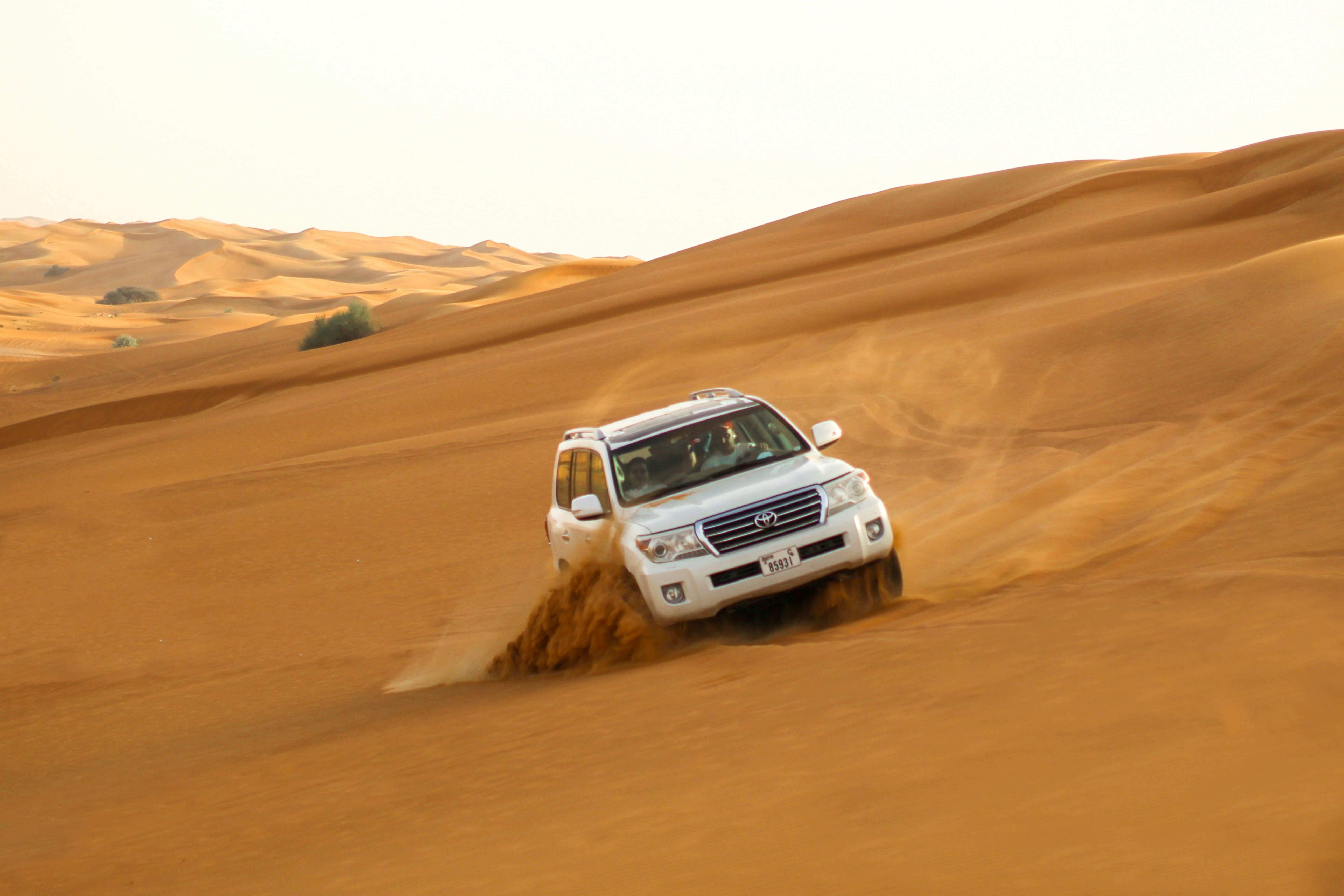
Dusk at the dunes north of El-Masara. The 4x4 crests a ridge. The sun drops behind the escarpment. Shadows stretch. A fennec appears atop a dune, silhouetted. It watches. You watch. No one moves. Then it vanishes.
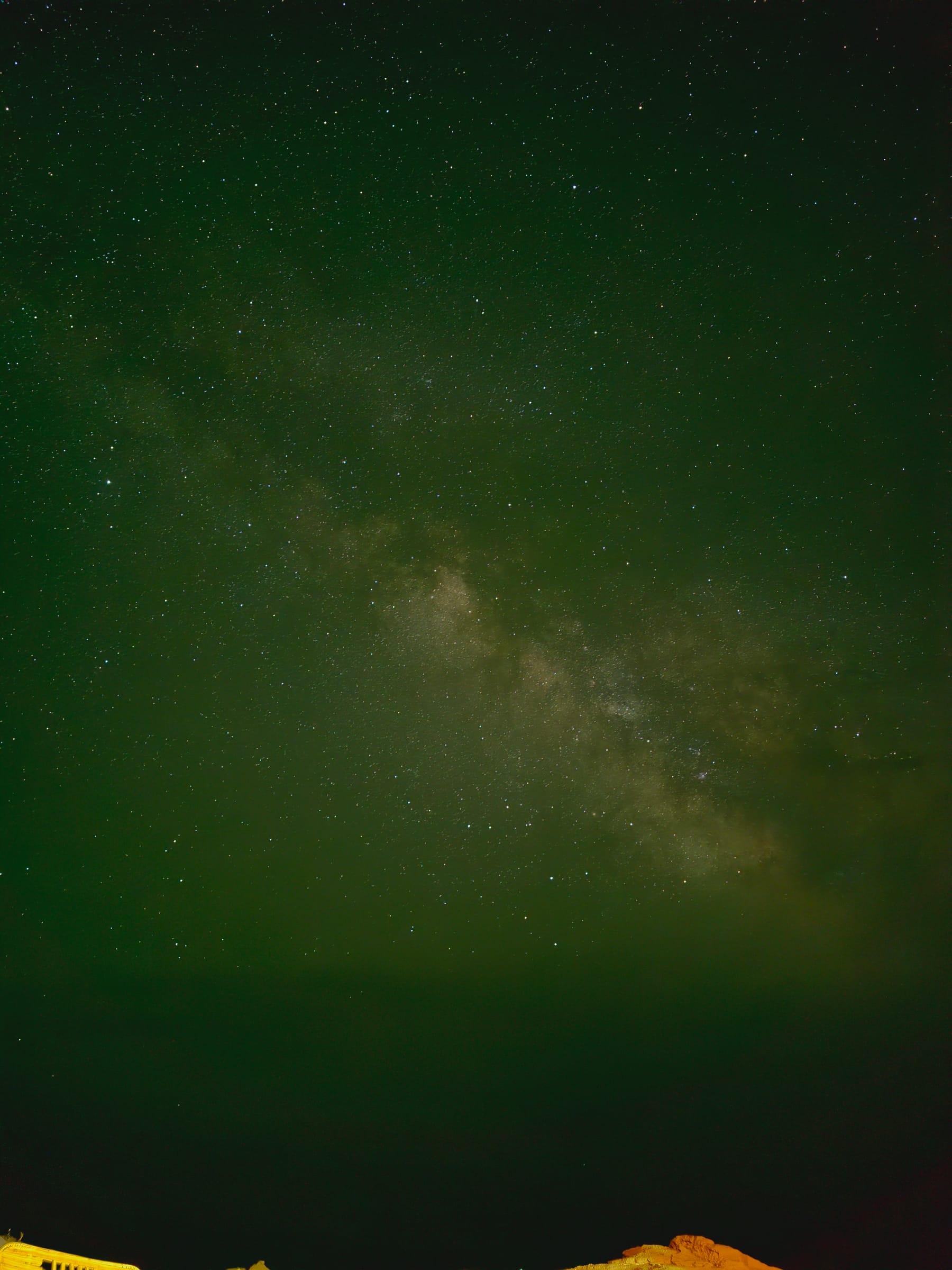
Night at a desert camp. No light pollution. The Milky Way casts shadows. Bedouin guides tell stories of the "Jinn of the Western Desert" — not fairy tales, but oral maps encoding water sources, dangerous ground, seasonal routes. The stars are their GPS.
What to Wear: Respect and Survival
Loose, long sleeves. Long trousers. The sun burns through thin fabric. A wide-brim hat, not a cap — your neck thanks you. Closed shoes with grip; sandals invite scorpions and sharp limestone.
For Al-Qasr and mosque visits: shoulders covered, knees covered. Women carry a scarf for hair covering. Not because you're forced — because you're a guest in a living community. The respect you show returns as welcome.
Evenings cool fast. A fleece or light jacket. The desert steals heat from your body the moment the sun sets.
Is Dakhla Oasis Worth Visiting?
Yes. Unequivocally. If you measure travel by UNESCO checklists, Dakhla has no World Heritage inscription (yet). But if you measure by depth — by the density of human and natural history per square kilometer — Dakhla rivals Luxor. The difference: Luxor performs for millions. Dakhla whispers for the few who listen.
Travelers who reach Dakhla often say it's the "real Egypt" they imagined before Instagram. I dislike that phrase. There is no fake Egypt. But Dakhla is Egypt without the buffer zone between you and the past. You touch Roman mortar. You taste dates from trees planted by Mamluk hands. You track fox prints in sand that held dinosaur feet 90 million years ago.
Nearby Wonders: The Western Desert Constellation
Dakhla anchors a circuit. Eighty kilometers north: Farafra Oasis and the White Desert National Park — chalk sculptures glowing under moonlight. One hundred twenty kilometers east: Kharga Oasis, with the Temple of Hibis (Darius I, 6th century BCE) and the Bagawat necropolis (earliest Christian cemetery in Egypt, 4th–7th century CE).
Three hundred kilometers northwest: Siwa Oasis, where Alexander consulted Amun and Cleopatra's Spring still flows. Siwa's salt lakes, Shali Fortress, and Berber culture deserve their own journey — which Bodda Tours provides via private Siwa Oasis tour from Cairo (2-day or 3-day options with desert safari, stargazing camping, and 4x4 jeep exploration).
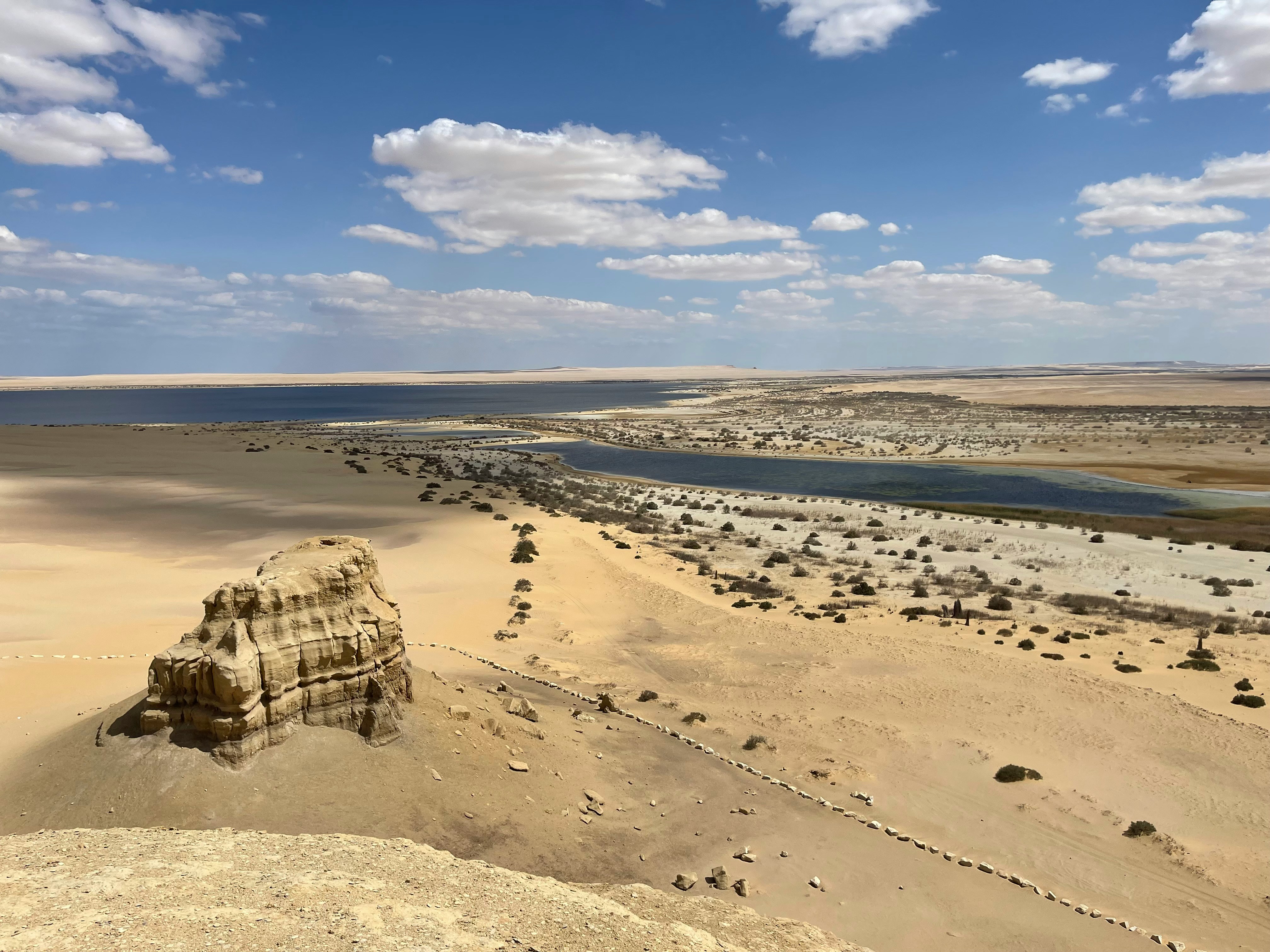
Two hundred kilometers northeast: Fayoum Oasis, day-trip distance from Cairo. Valley of the Whales (Wadi Al-Hitan, UNESCO), Magic Lake, Wadi El-Rayan waterfalls, and Tunis Village pottery. Bodda Tours runs a private Fayoum day tour from Cairo covering all of it.
Further south: Luxor and Aswan — Valley of the Kings, Karnak, Philae Temple, Abu Simbel. Bodda Tours designs multi-city Egypt packages combining Siwa + Cairo + Fayoum + Luxor + Aswan + Dakhla into a single seamless journey.
Why Choose Bodda Tours for Your Dakhla Oasis Tour
I built Bodda Tours because I watched too many travelers get herded onto shared buses with cracked seats, dropped at souvenir shops instead of sites, fed scripts instead of stories. That's not how my grandfather taught me to host guests.
100% private tours — no shared buses, no fixed schedules, no crowded vehicles. Your 4x4, your driver, your pace. Photography stops whenever the light demands. Tea with a Bedouin family because the conversation is good. A detour to a spring not on any itinerary because you asked "what's over there?"
Korean-speaking local guides — zero language anxiety. I speak Korean fluently. My guides do too. You ask nuanced questions about Coptic inscriptions or fennec fox behavior and get nuanced answers — not "yes, very old."
No scams, no surprises — verified tours with transparent service. No hidden fees. No commission markups. The price you see is the price you pay. Tickets, meals, and hotels are separate by design — you choose your level, we handle logistics.
No tuktuk fake safaris. In Siwa, some operators sell "desert safaris" on motorized rickshaws that cannot handle dunes. It's a scam. Bodda uses real 4x4 jeeps with professional drivers who know the difference between firm sand and a trap.
Direct booking, direct service. Bodda Tours is run by real local Egyptians — me and my team. Not a middleman. Not a reseller. You book directly with the people who drive the roads, know the guards, grew up eating dates from these palms.
No commission fees, no agent markups, no hidden charges. What you see is what you pay.
Real traveler reviews available on request. Ask us for recent guest contacts. See what others experienced.
Custom itineraries. Photography focus. Food preferences. Shopping time. Your pace. We build around you.
If something goes wrong, we make it right — compensation guarantee. Delayed flight? Vehicle issue? Weather closure? We solve it. That's the local advantage.
Ready to Explore Dakhla Oasis? Contact Bodda Tours Today
Whether you dream of tracking fennec foxes at dawn, reading Roman ostraca in a desert fort, or sharing tea in a 12th-century courtyard house — Bodda Tours is here to make it happen. Reach out anytime between 07:00-22:00 daily.
- WhatsApp: wa.me/201040541153
- KakaoTalk: open.kakao.com/o/smU92Hfi
- Email: info@boddatours.me
- Website: boddatours.me
Sources & References
- Egyptian Ministry of Tourism and Antiquities — Official Site Reports for Dakhla Oasis (Deir el-Hagar, Mut el-Kharab, Qasr el-Gib, Al-Qasr)
- UNESCO World Heritage Centre — Western Desert Oases Cultural Landscape Documentation
![[2026 Egypt Tours] Siwa Oasis Honest Review (Desert Safari & History)](https://boddatours.me/images/hq/siwa-salt-lake-hq.jpg)