![[2026 Egypt History Tours] El Alamein Music Heritage: Where Desert Winds Carry Wartime Ballads and Bedouin Rhythms (Coastal Culture Journey)](https://boddatours.me/images/fallback-post.png)
El Alamein Music Heritage: Where History Sings on the Mediterranean Wind
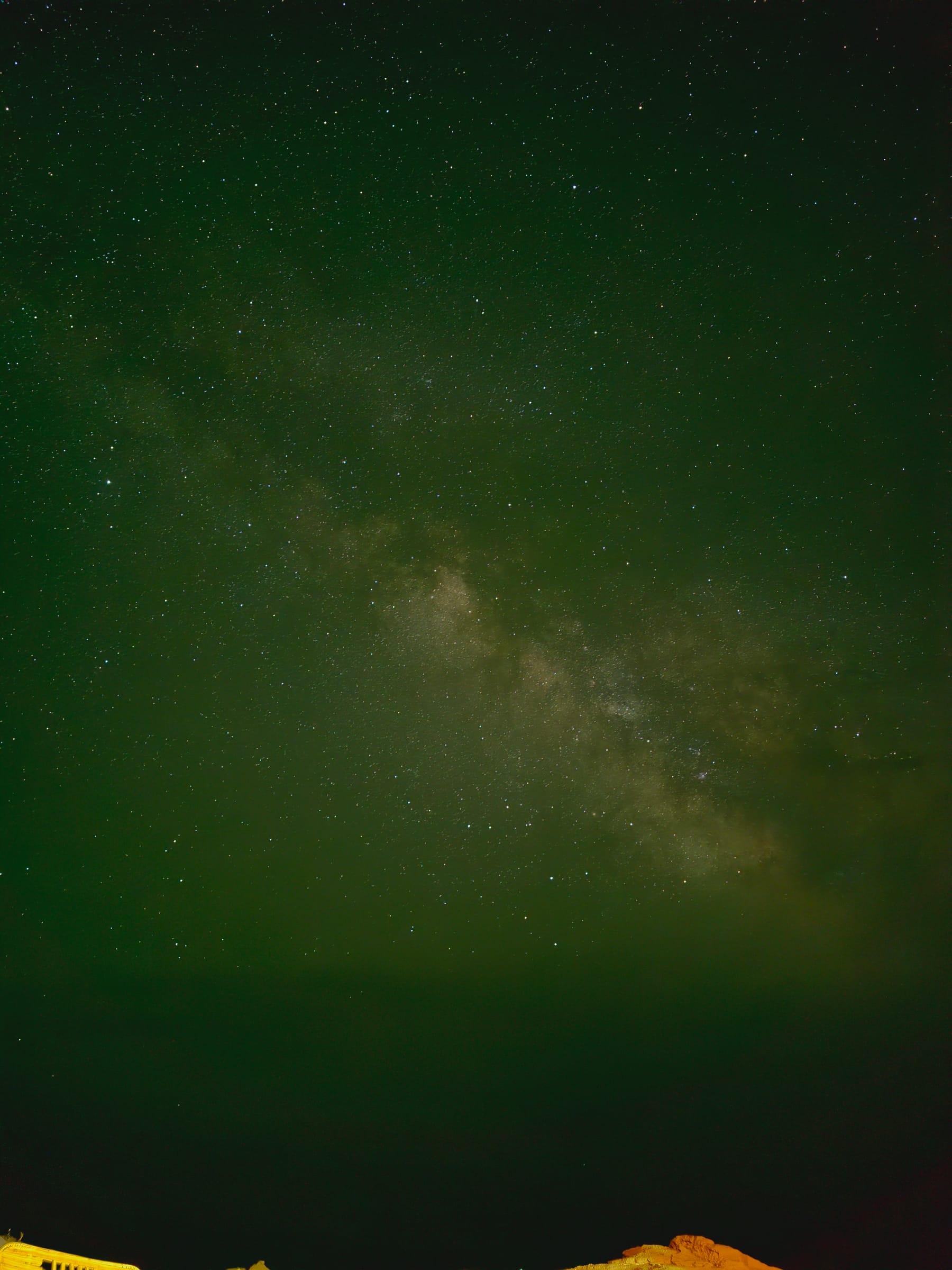
The first time I stood at the El Alamein war cemetery at dawn, I didn't hear silence. I heard a melody. It came from the wind moving through the rosemary bushes planted between the headstones — a sound the Bedouin call sawt al-rih, the voice of the wind. An old caretaker once told me the rosemary was chosen deliberately. "Rosemary for remembrance," he said, quoting Shakespeare in accented Arabic. "But also because it sings when the desert breathes."
That moment changed how I understand this stretch of coast. Most visitors come for the World War II history — the cemeteries, the museums, the strategic turning point of the North African campaign. They see stone and sand. I hear something else. I hear the songs soldiers sang in trenches. I hear the Bedouin rebaba echoing from desert camps nearby. I hear the mizmar at weddings in the fishing villages that dot the coastline. El Alamein isn't just a battlefield. It's a place where music has been stitching cultures together for a thousand years.
If you're searching for Egypt history tours that go beyond dates and battles, this coast holds a different kind of story. One written in rhythm and carried on salt air.
The Ancient Songline: Before the Battles, There Was Trade
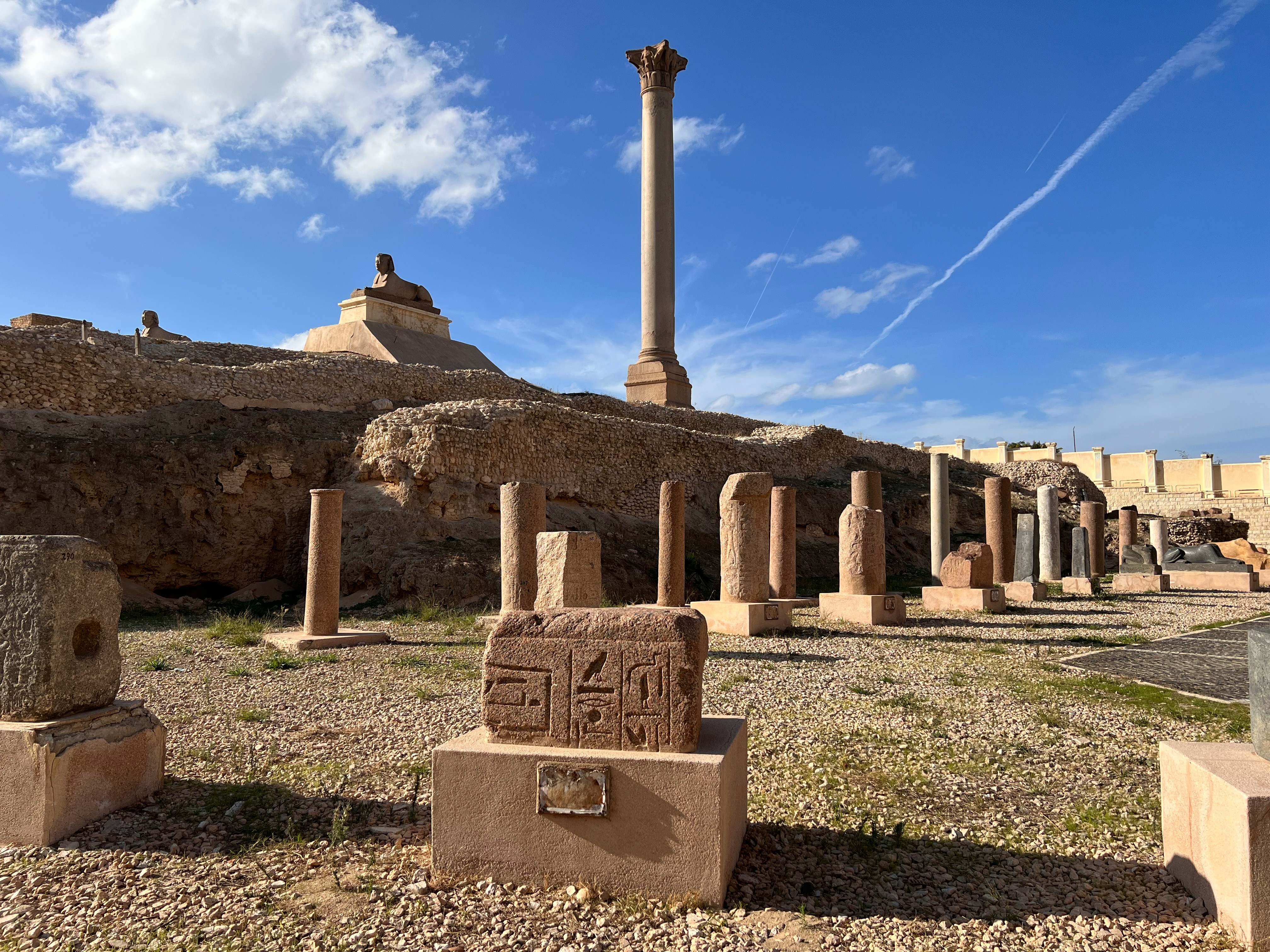
Long before Montgomery and Rommel faced off across these dunes, this coastline pulsed with a different rhythm. The ancient port of Marina El Alamein — known as Leukaspis in Greco-Roman times — was a bustling harbor from the 2nd century BCE through the 7th century CE. Ships carried wine, olive oil, and grain across the Mediterranean. They also carried songs.
Archaeologists excavating the site since the 1980s have uncovered more than villas and bathhouses. They've found aulos fragments — the double-reed pipes that scored Greek theater and Egyptian festivals alike. Terracotta figurines of musicians: a woman with a frame drum, a man with a lute-like pandura. The Egyptian Ministry of Tourism notes that Marina was a cultural crossroads where Ptolemaic, Roman, and local Egyptian traditions mingled in the streets and taverns near the harbor.
I've walked those ruins at sunset with a Bedouin friend whose family has camped these dunes for generations. He presses his ear to a fallen column and smiles. "The stones remember the music," he says. "They vibrate with it still." Whether that's poetry or physics, I've learned not to question it. The Egypt history tours that rush through Marina in thirty minutes miss the point entirely. You need to sit. Listen. Let the wind play the ruins like an instrument.
Wartime Ballads: When the Desert Became a Concert Hall
October 1942. The Second Battle of El Alamein. Two hundred thousand men dug into the sand, waiting for the artillery barrage that would open Operation Lightfoot. In the nights before the attack, something remarkable happened across both lines. Soldiers sang.
British Eighth Army troops sang "Lili Marlene" — the German love song that crossed enemy lines because loneliness speaks every language. Marlene Dietrich's recording had reached Cairo radio, and from there it drifted west on the same wind that carries the rebaba today. German Afrika Korps soldiers sang it too, their voices carrying across no-man's-land. Australian troops added "Waltzing Matilda." New Zealanders sang "Pokarekare Ana." South Africans harmonized on "Sarie Marais." Indian soldiers brought qawwali rhythms. The desert became a polyphonic chorus of homesickness and courage.
I've read the letters. The war diaries. The memoir of a Royal Army Service Corps driver who wrote: "We sang to keep the fear from settling in our bones. The desert swallows sound, but not song." The Commonwealth War Graves Commission maintains the cemetery where 7,240 Commonwealth soldiers rest. Each headstone bears a name, a regiment, sometimes a personal inscription chosen by families. "He died singing," reads one. "His song lives on," reads another.
The El Alamein Military Museum houses a battered harmonica recovered from a trench. A German soldier's zither. An Australian's didgeridoo fragment — brought all the way from the Outback, played in the Egyptian desert. These aren't curiosities. They're evidence that music was survival gear.
Bedouin Rhythms: The Desert's Own Score
While armies came and went, the Bedouin remained. The Awlad Ali tribes have navigated these coastal dunes and inland depressions for centuries. Their music isn't performed — it's lived. The rebaba (a single-string bowed lute) accompanies poetry recited around campfires. The tabl baladi (large frame drum) marks wedding processions. Women's zagharit — those high, trilling cries of celebration — pierce the night air at births and marriages.
I grew up in Cairo, but my grandmother was from a Bedouin family near Siwa. She taught me that every rhythm has a purpose. The hijaz maqam for longing. The rast for joy. The saba for the space between — grief tinged with hope. At El Alamein, you can still hear these maqamat if you know where to listen. Fishermen in the small harbors sing amal (work songs) hauling nets — rhythms that synchronize muscle and breath. Bedouin guides leading desert safaris still chant the old navigation poems, using stars as their sheet music.
UNESCO's Intangible Cultural Heritage lists recognize Bedouin poetic traditions across the Arab world. The nabati poetry of the Western Desert — sung, not merely recited — preserves history, genealogy, and tribal law in meter and rhyme. A single poem can hold a thousand years. When a Bedouin elder sings of "the wells our grandfathers dug," he's not being metaphorical. He's reading a map.
The Modern Festival: Where Old Meets New on the Marina Stage
In recent years, the newly developed Marina El Alamein resort area has begun hosting summer cultural festivals. The stage sits where Roman ships once unloaded amphorae. I attended the first El Alamein International Music Festival in 2023. Egyptian indie bands shared the bill with a Bedouin rebaba master from Matrouh. A Coptic choir sang Byzantine chants. A Nubian ensemble from Aswan brought pentatonic rhythms that predate the pharaohs.
The contrast could have been jarring. It wasn't. The audience — Cairo families, foreign residents, local Bedouin, European tourists — didn't just tolerate the variety. They leaned into it. When the Nubian drummer launched into a taqsim (improvisation) that echoed the rebaba's earlier melody, an old Bedouin man beside me closed his eyes and nodded. "Same root," he whispered. "Different branches."
This is what makes El Alamein unique among Egypt's historical sites. It's not frozen in one era. The music proves it's alive. The special Egypt tours that include festival dates offer something rare: a living culture, not a museum exhibit.
Best Time to Visit: When the Wind Carries the Clearest Notes
September through November. March through May. These are the windows when the Mediterranean wind is gentle enough to carry sound but strong enough to keep the heat honest. Summer brings temperatures that silence even the cicadas. Winter rains can turn the desert tracks to mud — beautiful, but difficult for travel.
I prefer late October. The summer crowds have gone. The sea is still warm. The sawt al-rih through the rosemary at the cemetery is at its clearest. And if you're lucky, you'll catch the date harvest festivals in the nearby oases — Siwa, Bahariya, Fayoum — where music and dates are inseparable companions.
How to Get There: The Road Itself Has a Rhythm
From Cairo, it's roughly 250 kilometers northwest on the coastal highway. Three hours by car if traffic cooperates. The road follows the Mediterranean, climbing and dipping over ridges that reveal sudden blue vistas. I always tell travelers: don't rush. Stop at the overlooks. The road has its own music — tires on asphalt, wind through open windows, the driver's playlist mixing Umm Kulthum with Amr Diab.
Bodda Tours runs private Egypt desert tours that include El Alamein as part of a wider Western Desert circuit. We'll pick you up in Cairo at dawn, when the city is still waking, and the highway feels like a ribbon unspooling into possibility. No shared buses. No fixed schedules. Just you, the road, and whatever music you bring — or discover along the way.
What to Expect: More Than Monuments
Expect silence that isn't empty. Expect wind that plays the rosemary like a harp. Expect a Bedouin guide who sings the navigation poems if you ask nicely. Expect the military museum's harmonica to haunt you longer than the tanks outside. Expect the Marina ruins to feel warm under your fingertips — not cold stone, but stone that held human warmth.
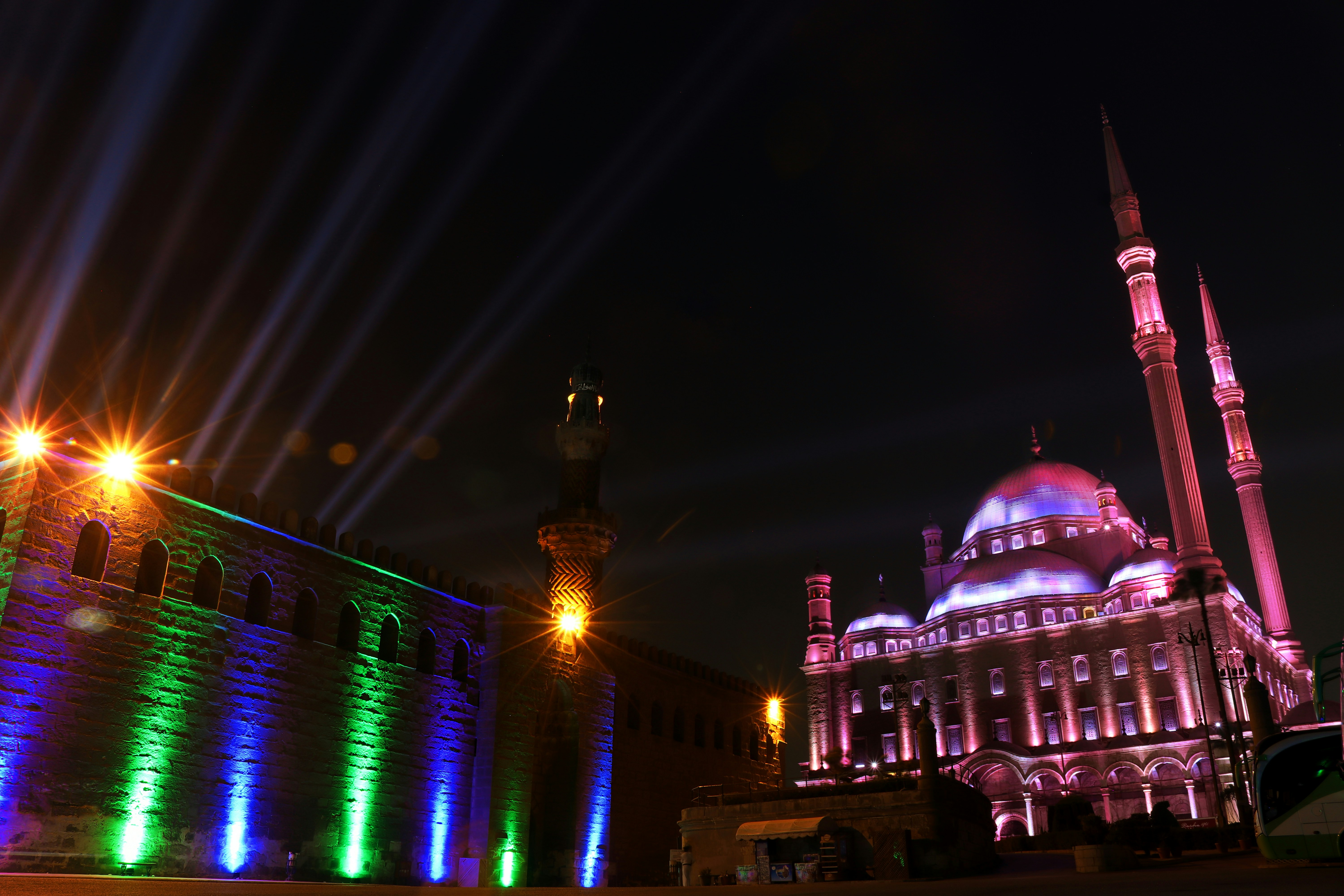
Expect to hear Arabic, English, German, Italian, Greek, Nubian, and Bedouin dialects all in one afternoon. Expect the call to prayer from the mosque in El Alamein town to intertwine with a fisherman's amal and a tourist's phone playing Fairuz. Expect to understand, viscerally, why this coast has been a cultural crossroads for millennia.
Expect to leave with a melody stuck in your ribs. Not an earworm. A heart-worm.
What to Wear: Respect Written in Fabric
Light, loose layers. Long sleeves against the sun. A scarf or shemagh — useful for wind, dust, and entering mosques or Bedouin tents. Comfortable walking shoes for the cemetery's gravel paths and the ruins' uneven stones. A hat with a brim. Sunglasses. The Mediterranean glare off the white headstones is fierce.
If you're visiting during a festival, bring something slightly dressier for evening — Egyptians appreciate effort. But never flashy. This coast values modesty. It's not about rules. It's about reading the room. The room, in this case, is a thousand years deep.
Is El Alamein Worth Visiting? The Honest Answer
Yes. But not for the reasons most guidebooks list.
It's worth visiting because standing at the German memorial's octagonal tower, you can see the entire battlefield spread below — and hear the wind singing through the cypress trees the same way it sang through the rosemary at the Commonwealth cemetery. Two enemies. One wind. One song.
It's worth visiting because a Bedouin elder might invite you to his camp for tea and rebaba, and you'll hear a poem about a well dug in 1400 that still waters his goats today.
It's worth visiting because the Marina ruins at sunset prove that Romans, Greeks, Egyptians, and Bedouin all danced to different rhythms on the same sand — and the sand didn't care. It just kept the beat.
It's worth visiting because music, here, isn't entertainment. It's memory. It's map. It's survival.
Nearby Attractions: The Coast Keeps Singing
El Alamein doesn't exist in isolation. The Western Desert unfolds southward in verses.
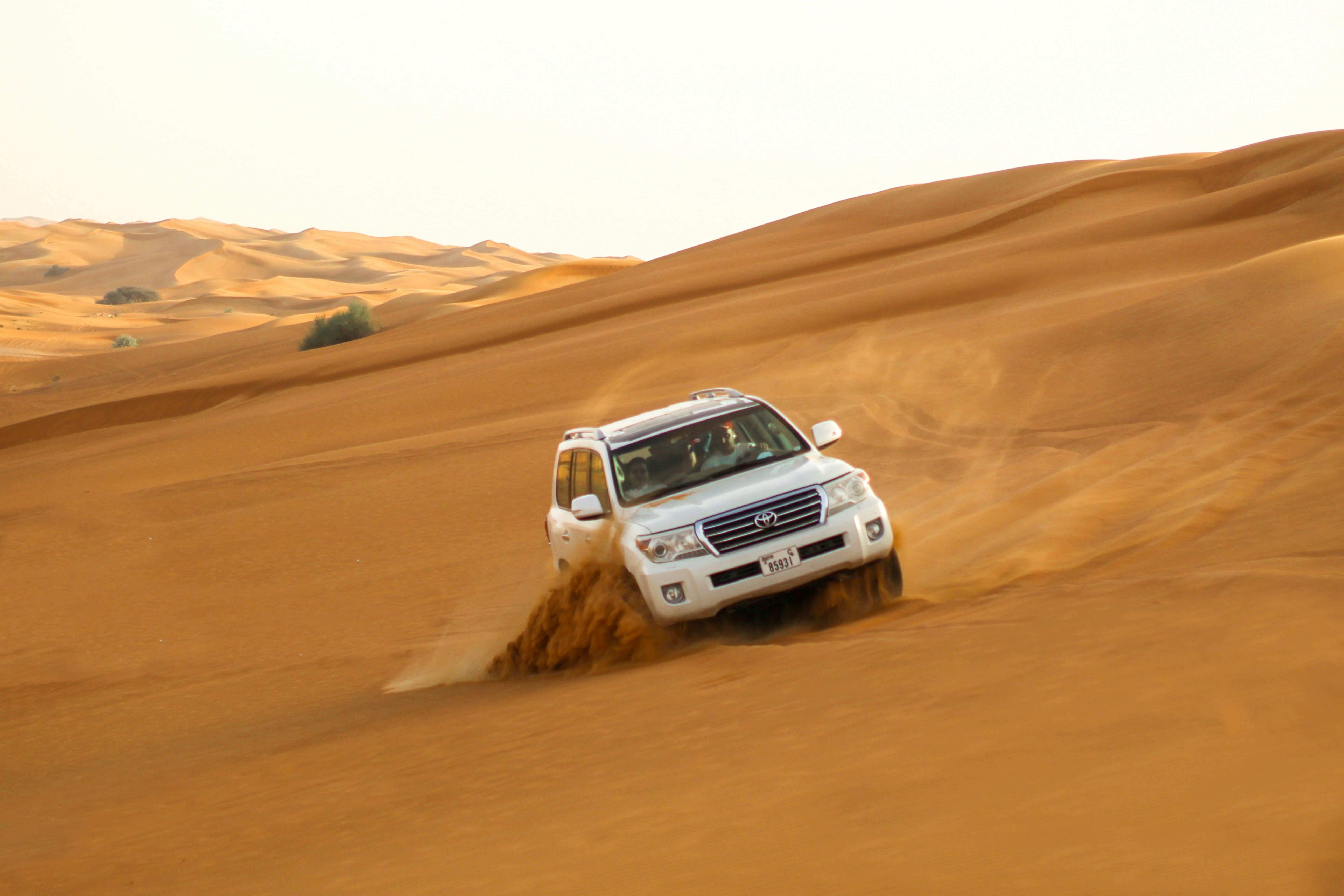
Siwa Oasis — 300 kilometers southwest. The Oracle of Amun that Alexander the Great consulted. Salt lakes that mirror the sky. Shali Fortress melting into the desert. Bedouin zaar ceremonies and silver jewelry that sings when women dance. Bodda Tours offers a private Siwa Oasis tour from Cairo — two or three days in a real 4x4 jeep, not a tuktuk. Some operators sell fake tuktuk "safaris" that are a total scam. We use proper desert vehicles with professional drivers who know every dune's song.
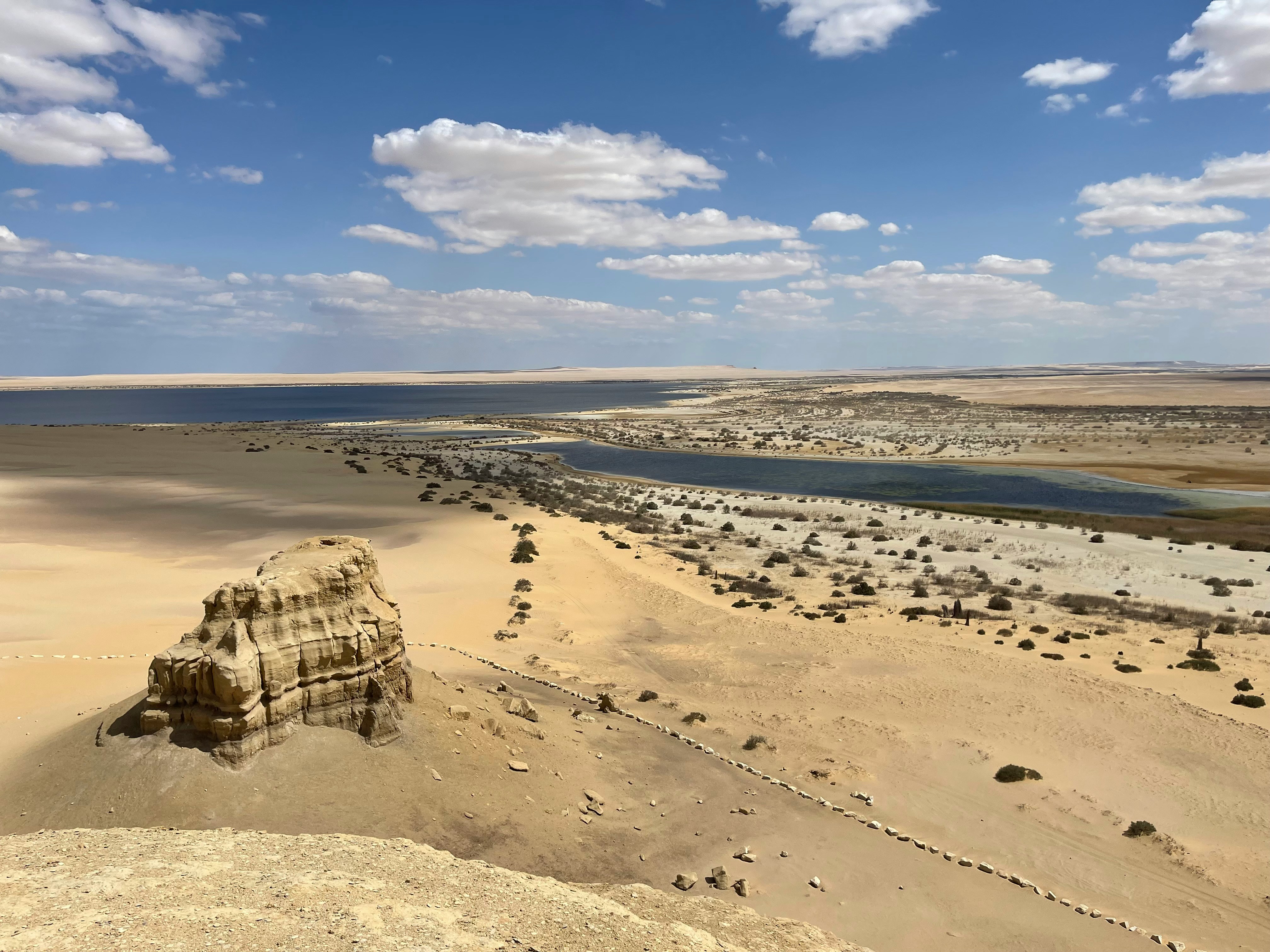
Fayoum Oasis — Closer to Cairo, just 100 kilometers. Valley of the Whales (Wadi Al-Hitan), a UNESCO World Heritage site where 40-million-year-old whale fossils sing of an ancient sea. Magic Lake changing colors at sunset. Wadi El-Rayan waterfalls. Tunis Village pottery workshops where the wheel's rhythm hasn't changed in centuries. Our Fayoum Oasis tour from Cairo is a full day of wonder.
Alexandria — 100 kilometers east. The Bibliotheca Alexandrina reviving the ancient library's spirit. Qaitbay Citadel on the Pharos lighthouse site. Roman catacombs. Greek cafes where rebetiko once played. The Corniche where fishermen still sing amal at dawn.
Bahariya & the Black/White Deserts — Further south. Volcanic hills and chalk formations that look like a surrealist's dream. Bedouin camps where the rebaba plays under more stars than you've ever seen. Our Egypt desert safari tour covers this in comfort.
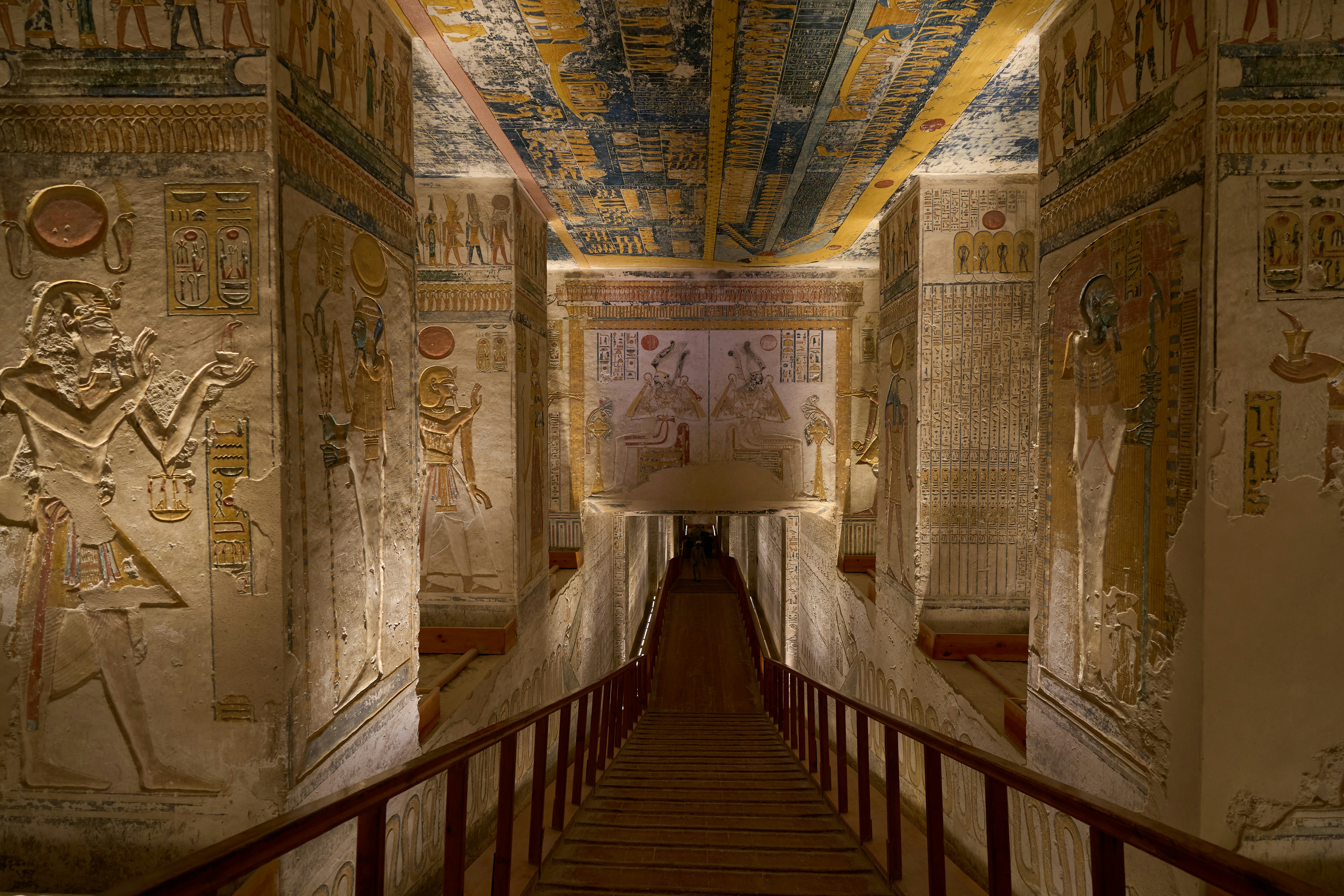
Luxor & Aswan — For the pharaonic deep dive. Valley of the Kings. Karnak. Philae Temple. Abu Simbel. Nubian villages where the pentatonic scale remembers ancient Egypt. Our Luxor tours and Aswan tours connect you with local guides who know the stories behind every hieroglyph.
Why Choose Bodda Tours for Your El Alamein Journey
I'm not a booking platform. I'm not a reseller. I'm Bodda — born in Cairo, raised on these streets, running tours with my cousins and childhood friends. When you message us on WhatsApp, you're talking to me or my brother. Average response time: under ten minutes. Real human. No chatbot.
100% private tours. No shared buses. No cramped seats. No strangers' schedules. Your vehicle. Your pace. Your music.
Korean-speaking guides. Zero language anxiety. We understand the nuance between "spicy" and "Korean spicy." We know when you want silence and when you want stories.
No scams. No surprises. Verified tours only. Transparent service. No hidden fees. No commission markups. The price you see is the price you pay — though we don't discuss prices publicly. You ask, we answer honestly.
Real 4x4 jeeps in Siwa. Not tuktuks. This matters. The desert doesn't forgive cheap vehicles.
Direct booking, direct service. We're the operators. Not middlemen. Not agents. You book with the people who drive the cars, know the guides, and care about your experience.
Custom itineraries. Photography stops at golden hour. Extra time at the cemetery for a specific regiment. A detour to a Bedouin camp for tea and rebaba. Your wish is the itinerary.
Real traveler reviews. Ask us. We'll send recent guest contacts. Their words matter more than ours.
If something goes wrong, we make it right. Compensation guarantee. We're not perfect. But we're accountable.
Ready to Hear El Alamein's Song?
Whether you're drawn by wartime history, Bedouin culture, ancient ports, or the simple desire to stand where the wind sings through rosemary — Bodda Tours is here to make it happen. Reach out anytime between 07:00-22:00 daily. We'll listen first. Plan second.
- WhatsApp: wa.me/201040541153
- KakaoTalk: open.kakao.com/o/smU92Hfi
- Email: info@boddatours.me
- Website: boddatours.me
Sources & References
- Egyptian Ministry of Tourism and Antiquities — Official site reports on Marina El Alamein archaeological excavations
- UNESCO World Heritage Centre — Wadi Al-Hitan (Valley of the Whales) and Intangible Cultural Heritage listings for Bedouin poetic traditions
- Commonwealth War Graves Commission — El Alamein War Cemetery records and historical archives
- El Alamein Military Museum — Official artifact catalog including musical instruments recovered from battlefield sites
![[2026 Egypt Tours] Siwa Oasis Honest Review (Desert Safari & History)](https://boddatours.me/images/hq/siwa-salt-lake-hq.jpg)